
Forex trading signals promise quick wins in the currency markets. But most are unreliable, and many are outright scams. Blindly following them often leads to losses—here’s why, and a better way to approach trading.
Forex signals are trade recommendations. Providers suggest when to buy or sell a currency pair, often with entry points, stop-loss levels, and take-profit targets. They come from human analysts, algorithms, or automated systems. Traders use them to save time or gain insights, especially beginners searching for “best forex signals” or “free forex signals Telegram.”
The industry has exploded with Telegram channels, apps, and websites offering “accurate forex signals” or “daily forex signals.” Some are free, others paid (monthly subscriptions from $30–$200). Searches for “forex signals providers,” “paid forex signals,” or “free vs paid forex signals” show high interest. But reality doesn’t match the hype.
Most retail forex traders lose money—70-90% according to broker disclosures required by regulators like ESMA and studies from sources like Investopedia and BabyPips.com. Signals contribute to this, as they encourage overtrading or poor risk management without building real skills.
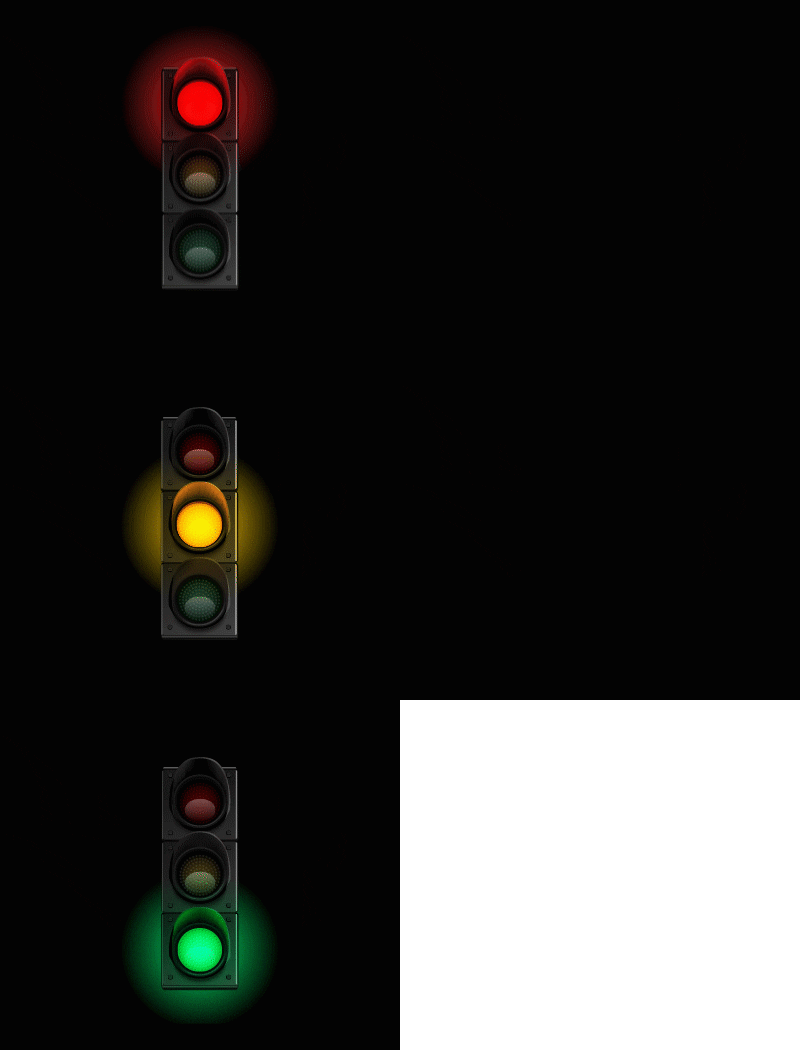
Why Most Forex Trading Signals Are Unreliable
Many signals lack consistency. Providers cherry-pick winning trades or use unverified backtests. Free signals often serve as bait to upsell paid versions or broker affiliations.
Common issues include:
- No Verified Track Record: Legitimate providers show audited performance on platforms like Myfxbook or FXBlue. Scammers use screenshots or fake statements.
- Guaranteed Profits: Promises of “90% accuracy” or “risk-free trades” are red flags. No one can guarantee forex outcomes due to market volatility.
- Selective Reporting: They highlight wins but hide losses, creating illusion of profitability.
- Overtrading: Too many signals lead to excessive commissions and emotional decisions.
Paid signals can be better with detailed analysis, but many still underperform. Free ones are often low-quality or promotional.
Data backs this: The CFTC warns about signal seller frauds, where providers collect fees then vanish or deliver losing trades (source: CFTC Fraud Advisories).
_______________________________________________
👉 A Better Alternative: Deep Daily Currency Analysis
Instead of chasing signals, focus on understanding markets through comprehensive analysis. This builds lasting skills and avoids blind following.
One reliable resource is the Daily Currency Analysis at https://forexdailyreport.org/daily-currency-analysis. It provides in-depth breakdowns of major pairs like EUR/USD, GBP/USD, USD/JPY, AUD/USD, USD/CHF, USD/CAD and GOLD covering:
- Technical levels (support/resistance, trends)
- Fundamental drivers (news, economic data)
- Sentiment overview
- Actionable insights without “magic” signals
It’s free, objective, and helps you make your own decisions—far better for long-term success than unreliable signals.
________________________________________________
Common Forex Signal Scams and How to Spot Them
The forex signals industry attracts scammers promising easy money. Here are prevalent types:
- Signal Seller Scams — Providers charge for “winning signals” but use fake results or disappear after payment.
- Fake Reviews and Testimonials — Flooded with fabricated success stories on their sites.
- Upsell Tactics — Free signals lose intentionally to push premium versions.
- Affiliate-Driven Groups — Telegram channels promote unregulated brokers for commissions, profiting from your losses.
- Robot or EA Scams — Automated systems claiming perfect trades but failing live.
| Red Flag | Why It’s Suspicious | How to Check |
|---|---|---|
| Guaranteed Returns | Forex has no guarantees | Real providers disclose risks |
| Unverified Performance | Easy to fake screenshots | Demand Myfxbook/FXBlue links |
| Pressure to Join Quickly | Creates urgency to bypass thinking | Take time; test on demo |
| No Transparency | Hides losing trades | Ask for full history, including losses |
| Offshore/Unregulated | Harder to recover funds | Check CFTC, FCA, or ASIC registration |
Sources: Investopedia’s “How to Identify Forex Scams,” CFTC advisories, and Forex Peace Army reviews.
In 2025, scams often start on social media or dating apps, leading to fake platforms (CFTC warnings).
Free vs. Paid Forex Signals: Pros and Cons
Free signals attract beginners searching “best free forex signals,” but they have drawbacks.
- Free Signals
- Pros: No cost, good for learning.
- Cons: Lower accuracy, fewer details, often promotional.
- Paid Signals
- Pros: More analysis, support, potentially higher quality.
- Cons: Expensive, no profit guarantee; many still unreliable.
Comparison from reviews (e.g., ForexBrokers.com, Myfxbook):
| Aspect | Free Signals | Paid Signals |
|---|---|---|
| Cost | $0 | $30–$200/month |
| Accuracy Claim | Varies, often unverified | 70-90% claimed (rarely proven) |
| Analysis Depth | Basic | Detailed (if legitimate) |
| Risk of Scam | High (bait) | Medium (overhyped) |
| Best For | Testing ideas | Serious traders (with vetting) |
Paid may offer value from reputable sources, but most traders do better learning independently.
👉 A Better Alternative: Deep Daily Currency Analysis
Instead of chasing signals, focus on understanding markets through comprehensive analysis. This builds lasting skills and avoids blind following.
One reliable resource is the Daily Currency Analysis at https://forexdailyreport.org/daily-currency-analysis. It provides in-depth breakdowns of major pairs like EUR/USD, GBP/USD, USD/JPY, AUD/USD, USD/CHF, USD/CAD and GOLD covering:
- Technical levels (support/resistance, trends)
- Fundamental drivers (news, economic data)
- Sentiment overview
- Actionable insights without “magic” signals
It’s free, objective, and helps you make your own decisions—far better for long-term success than unreliable signals.
___________________________________________________
FAQ: Common Questions About Forex Trading Signals
Are forex trading signals worth it? Rarely for most retail traders. They can supplement learning, but relying on them often leads to losses. Develop your own strategy instead.
How accurate are forex signals? Claims of 80-90% are common but rarely verified. Real accuracy hovers lower, especially in volatile markets.
Can I get reliable free forex signals? Some exist (e.g., from brokers like IG or Forex.com), but most free ones are low-quality or scammy.
What’s the difference between forex signals and copy trading? Signals are recommendations; copy trading auto-replicates trades. Both have risks.
How do I choose a good forex signals provider? Look for verified tracks, transparency, no guarantees, and regulation ties. Test on demo first.
Is forex trading itself a scam? No—it’s a legitimate market. But signals and unregulated providers often are.
Forex trading rewards patience, education, and discipline—not shortcuts. Skip unreliable signals and invest in knowledge. For daily insights, check https://forexdailyreport.org/daily-currency-analysis.